Blogfield notes
Pricing Standards for SaaS Teams: A Practical Guide
Friday afternoon, Maya posts in deals asking for a 40% discount on a mid market renewal. Her manager is travelling, sees the message from an airport lounge, and replies, “yep.” By Monday, Finance has flagged the margin, Legal has found that the approval included auto renewal term
Friday afternoon, Maya posts in #deals asking for a 40% discount on a mid-market renewal. Her manager is travelling, sees the message from an airport lounge, and replies, “yep.” By Monday, Finance has flagged the margin, Legal has found that the approval included auto-renewal terms nobody reviewed, and Customer Success is warning that the lower price has reset the customer's expansion expectations.
One casual Slack reply has now become a forecast problem. No written rule required pre-approval above a defined threshold, no quoting template required line-item justification, and no system captured the decision as an auditable approval. This is why pricing standards matter. They turn pricing from a series of private negotiations into an operating process that people and systems can follow.
Table of Contents
- When a Slack Discount Quietly Breaks a Quarter
- What Pricing Standards Actually Mean
- The Four Building Blocks of a Pricing Standard
- Before and After a Pricing Standard
- Encoding Pricing Standards Into Real Workflows
- A 30-Day Rollout Plan That Sticks
- Common Objections From Sales Leaders
When a Slack Discount Quietly Breaks a Quarter
The problem wasn't Maya's judgment alone. She was trying to keep a renewal alive, and the manager wanted to help quickly. The failure was operational: the company had no dependable path between “the customer is pushing back” and “this exception is approved.”
By Monday, several teams are working from different versions of the deal. Maya sees a manager's message as permission to proceed. Finance sees an unexplained margin concession. Legal sees commercial terms bundled into a discount approval. Customer Success sees a new reference price that could affect every future expansion conversation.
Practical rule: A Slack reaction can start an approval, but it shouldn't be the approval record.
The commercial risk also extends beyond one renewal. Repeated concessions teach buyers what to ask for next time, while reps learn which manager is most likely to approve an exception. That pattern is explored well in this discussion of dinamiche sconto monopolio, which connects discount behavior with longer-term market dynamics.
A workable standard would have answered basic questions before Maya sent the request:
- Threshold: Which discount band can a rep offer without escalation?
- Evidence: What must the quote show, such as term length, package, customer segment, and margin impact?
- Authority: Which role approves the exception, and which terms require separate Legal review?
- Record: Where does the final decision live so Finance, Sales, and Customer Success can rely on it?
The specific threshold will differ by company. The principle won't. Pricing standards exist because informal approvals disappear into chat history, while a closed-won deal remains in the forecast, the invoice system, and the customer's expectations.
What Pricing Standards Actually Mean
Pricing standards are documented, enforceable rules for how a SaaS company discounts, quotes, approves, and packages deals. They sit between commercial strategy and daily execution.
A price list tells the team what products and list prices exist. Pricing strategy explains how the company positions value, separates tiers, serves segments, and chooses a monetization model. Payment and revenue policies govern issues such as billing schedules, collections, and recognition. Pricing standards connect those decisions to the actions a rep takes on a live deal.
A useful working definition is the set of discount ceilings, approval thresholds, quoting templates, and enforcement hooks that Sales, Solutions Engineering, Finance, Legal, and Customer Success follow before a deal reaches closed-won.
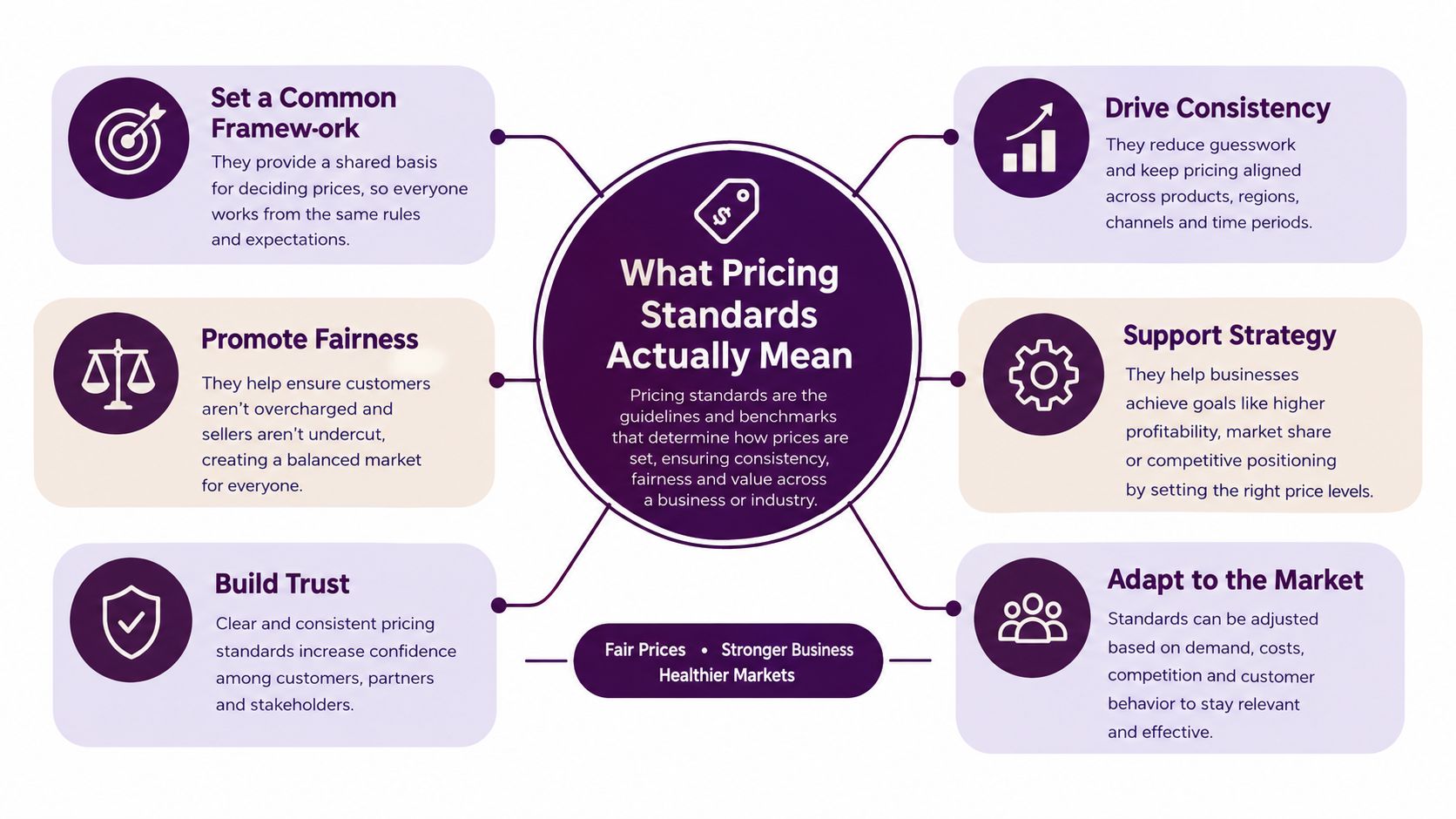
Without that operating layer, even a thoughtful strategy degrades into rep-by-rep improvisation. One AE may bundle onboarding into a renewal, another may discount the subscription instead, and a third may offer unusual payment terms to compensate for a budget objection. Each choice can look reasonable in isolation, but the company loses comparability across deals.
A simple test for a real standard
A pricing standard should be clear enough to answer four questions inside the workflow:
- What can I offer?
- What requires approval?
- What must appear on the quote?
- Where is the decision recorded?
If the answer lives only in a slide deck or in the memory of one Sales Director, it isn't an operating standard. A standard becomes useful when a rep can find it during a negotiation, a manager can review the same evidence, and the CRM or CPQ system can prevent accidental deviations.
Consistency doesn't mean every customer receives an identical package. It means the company uses the same logic to decide when customization is justified, how exceptions are priced, and who accepts the trade-off.
The Four Building Blocks of a Pricing Standard
A pricing standard works as a stack. Rules set the commercial boundary, approval gates control exceptions, templates shape the output, and enforcement makes the process real. Remove one layer and the remaining pieces become easier to bypass.
Discount rules
Discount rules define the acceptable range for a deal. They can vary by segment, product family, contract term, deal size, renewal status, partner involvement, or strategic importance. The important detail isn't merely the headline ceiling. The standard should also explain whether a multi-year incentive can be combined with a volume concession, whether partner margin is deducted before or after the discount, and whether services are treated separately from recurring revenue.
Pricing-model choices matter. A team reviewing SaaS pricing model strategies should translate its chosen model into rules a rep can apply, rather than leaving monetization logic at the strategy level.
Approval gates
Approval gates answer who can approve what, with what evidence, and within what expected response time. A gate should request structured information, not a vague “please approve” message. The approver may need the customer segment, current and proposed annual value, term, discount rationale, competitive context, margin impact, and any non-standard legal terms.
A good gate also distinguishes commercial approval from legal approval. A VP might approve a discount, but that doesn't automatically approve a bespoke termination clause or an unusual renewal structure.
Quoting templates
Templates keep the customer-facing result consistent. They should contain approved bundles, product names, line-item layouts, term structures, payment options, and fallback language for common objections. The template should make the approved path fast, not force every rep to recreate a quote from a blank document.
Process documentation needs the same discipline. A practical guide to process standardization is useful when deciding which rules belong in written policy and which should be embedded directly in tools.
Enforcement
Enforcement checks whether the first three layers are being followed. A CPQ system can reject unapproved bundles. HubSpot can flag a discount outside the permitted range. Slack can notify an approver when a threshold is crossed. An AI coworker can review a proposal for missing approvals before it reaches the customer.
| Building Block | What It Owns | Example |
|---|---|---|
| Discount rules | The commercial boundaries | A renewal discount depends on segment, term, and product |
| Approval gates | Exception authority and evidence | A non-standard concession routes to Finance and the VP |
| Quoting templates | Consistent customer-facing output | Approved package, line items, terms, and fallback language |
| Enforcement | Checks and auditability | CRM warnings, CPQ restrictions, Slack alerts, and proposal review |
The best standard doesn't try to eliminate judgment. It makes judgment visible, repeatable, and accountable.
Before and After a Pricing Standard
Consider the same mid-market deal under two operating models.
Without a standard, the rep offers 35% off in Slack because the buyer says the renewal budget is under pressure. Finance challenges the concession after the quote is drafted. The manager asks for a revised business case, Legal reviews terms that weren't part of the original request, and the customer waits while internal teams debate. The deal eventually closes, but the seller has spent time defending a number that no system can explain.
With a standard, the rep opens the approved renewal template and enters the customer's segment, term, products, and requested concession. The discount falls within the 20% auto-approval band defined by the company, so the quote moves through the normal path. Legal reviews only the non-standard terms, and the deal record preserves the reason, approver, and final commercial structure.
| Dimension | Without Standards | With Standards |
|---|---|---|
| Deal cycle | Repeated internal debate | Predictable routing |
| Margin | Erodes through improvisation | Protected by defined boundaries |
| People involved | Finance, Sales leadership, and Legal join late | The right approvers join at the right point |
| Customer experience | Delayed revisions and changing explanations | Consistent quote and clearer response |
| Forecast quality | Amount depends on unresolved exceptions | Amount reflects a traceable decision |
The difference isn't that the second deal has no exception. A customer can still receive customized terms. The difference is that the exception has a route, an owner, and a record.
Revenue intelligence can help teams identify where this drift appears across pipeline stages. A workflow built around revenue intelligence software can surface repeated concessions, stalled approvals, and discrepancies between quoted and booked values.
A standard also changes management conversations. Instead of asking why one rep gave away more than another, leaders can ask whether the band is correctly designed, whether the approval route is too slow, or whether a package belongs in the standard catalog.
Encoding Pricing Standards Into Real Workflows
Writing the policy is the easy part. The hard part is ensuring that the rule appears at the moment someone makes a pricing decision.
Start with a field map. Every important rule needs a home in the workflow:
- Deal context: segment, region, new business or renewal, product family, and term.
- Commercial values: list amount, proposed amount, discount, recurring value, and services.
- Exception data: reason, competitor context, requested concession, and approver.
- Control status: approval required, approval complete, legal review required, and quote ready.
HubSpot as the decision record
In HubSpot, create structured deal properties instead of relying on free-text notes. A discount property can be compared against the allowed band for the deal's segment and motion. If the value is outside that band, the record should display a visible warning and block the next stage until the required approval is attached.
The CRM should also preserve the original list amount and the final approved amount. If the rep edits the discount after approval, the workflow should reopen the approval rather than treating the old decision as valid.
CPQ as the packaging guardrail
The CPQ layer should control what can be combined. Approved bundles, seat ranges, implementation options, and term structures belong in the catalog. If a rep needs a package that isn't listed, the system should create an exception request with the missing rationale, not allow a free-form quote that bypasses review.
Keep the customer-facing quote simple even when the internal logic is detailed. The customer needs a clear offer. The company needs the underlying line items, approval metadata, and version history.
Slack as the routing layer
Slack is useful for speed, but it shouldn't be the source of truth. Configure an approval workflow that posts a structured request when a discount crosses a threshold. The message should include the deal link, customer segment, proposed term, list value, requested concession, reason, and links to the quote and CRM record.
A reviewer can approve from Slack, but the action should write back to the CRM or CPQ system. That prevents an airport thumbs-up from becoming an undocumented commercial commitment.
Stripe as the billing check
Stripe should receive the approved commercial structure, not whatever value a rep last typed into a message. Use the approved quote or CPQ record as the source for the invoice amount, billing cadence, products, and renewal terms. If Stripe receives a price that doesn't match the approved record, route it for review before invoicing.
This is also where finance catches operational gaps. If a discount is approved on subscription revenue but accidentally applied to an implementation fee, the billing workflow should expose the mismatch.
An AI coworker for the gaps between tools
An AI coworker such as Frida from Supercenter can be @mentioned in Slack to work across connected systems, including HubSpot and Stripe. Teams can encode pricing rules as reusable skills, ask the coworker to check a proposal against those rules, and preserve an audit trail of the resulting actions. That gives RevOps another review point before an off-list number leaves the company.
Automation doesn't mean removing people from every decision. It means making the compliant path easier than copying a number into a chat message. For complex exceptions, the system should gather the evidence and send the decision to the accountable human.
Teams that already manage cross-system processes can apply similar patterns through Salesforce workflow automation, especially where approvals, records, and downstream billing need to stay aligned.
A short demonstration can help teams make the workflow concrete before configuration begins.
<iframe width="100%" style="aspect-ratio: 16 / 9;" src="https://www.youtube.com/embed/cybdz8gsYUY" frameborder="0" allow="autoplay; encrypted-media" allowfullscreen></iframe>A 30-Day Rollout Plan That Sticks
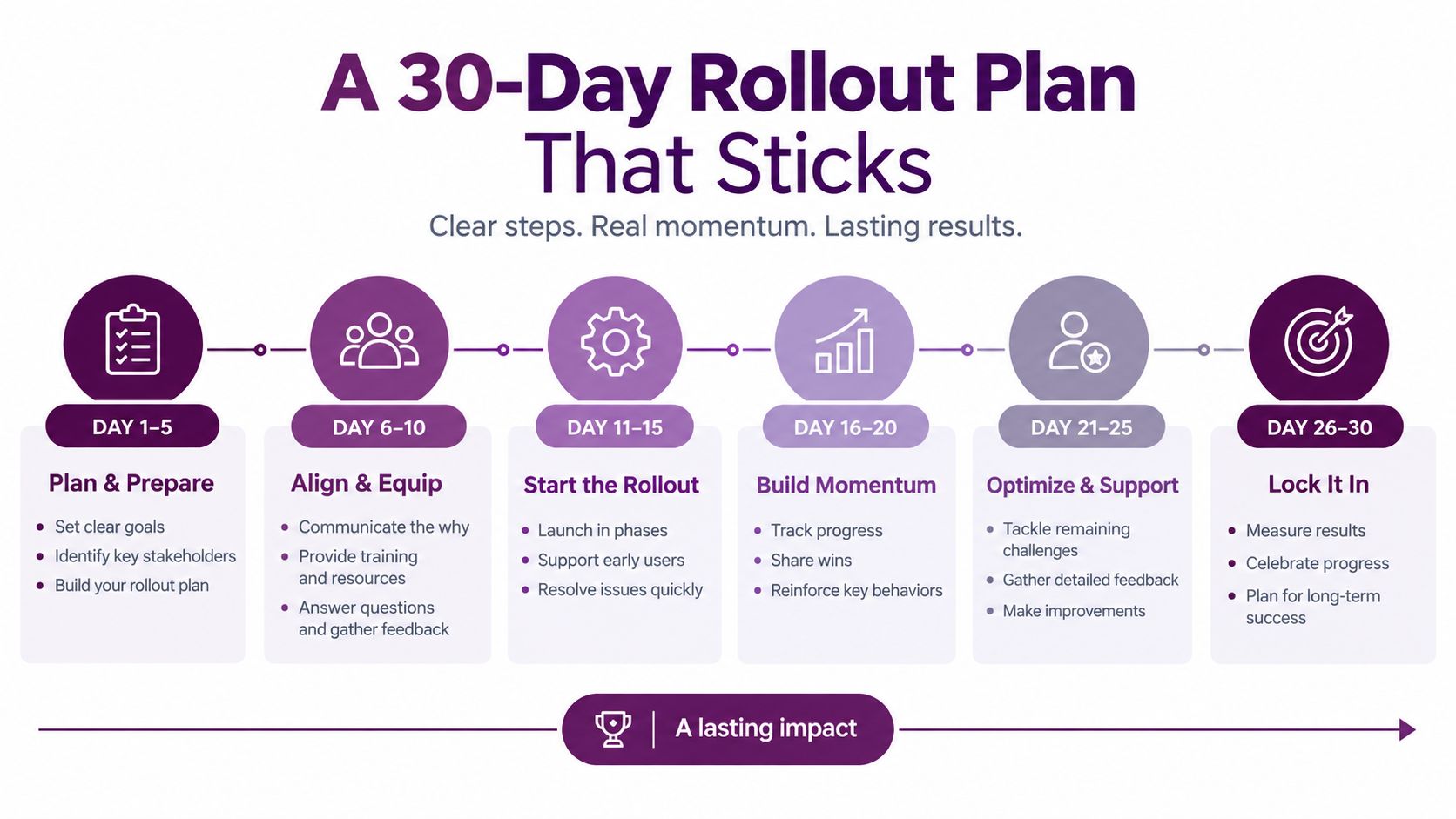
A pricing standard should launch as a working process, not as a document that Sales is expected to memorize.
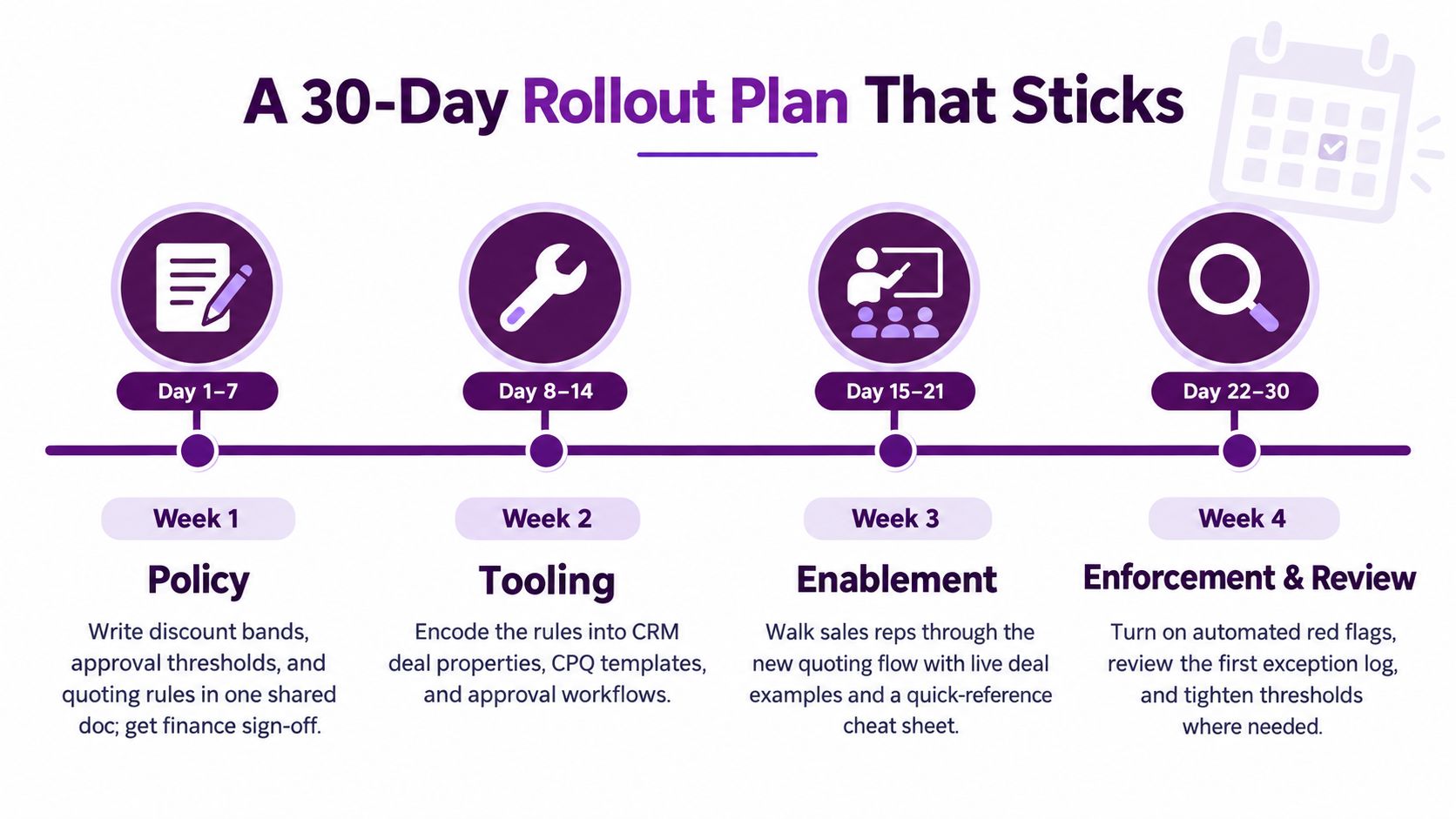
Week one, policy
Write the discount bands, approval thresholds, package rules, and quoting requirements in one shared document. Finance should approve the commercial logic, Sales leadership should test whether reps can use it in real conversations, and Legal should identify terms that need a separate route.
Keep the first version narrow. Cover the deal motions that create the most confusion rather than trying to solve every edge case immediately.
Week two, tooling
Configure the CRM fields, CPQ catalog, Slack approval workflow, and Stripe price books to reflect the policy. Test both the normal path and a deliberate exception. Check what happens when a rep changes a discount after approval, removes a line item, or adds a non-standard term.
The audit trail matters as much as the alert. A warning that disappears in Slack won't help Finance reconcile the final invoice.
Week three, enablement
Run live walkthroughs using current deals, anonymized if necessary. Ask reps to create a standard quote, request an exception, revise a term, and find the approval record. A short reference sheet should show the common paths and the person responsible for each escalation.
Week four, audit
Review a sample of recently closed deals against the new standard. Look for missing approval evidence, inconsistent package names, discounts that changed after approval, and invoices that don't match quotes. Publish the findings without turning the first review into a blame exercise.
The first month is about building the muscle. Tighten confusing rules, remove unnecessary fields, and fix slow approvals before declaring the process finished.
Common Objections From Sales Leaders
Sales leaders usually worry that pricing standards will create surveillance, slow negotiations, or flatten enterprise deals into rigid packages. Those concerns are reasonable when the proposed solution is a long policy document and a pile of manual approvals.
The answer is to design the standard around decisions, not bureaucracy.
| Objection | The Worry | The Reframe |
|---|---|---|
| “Sales will resent it” | Reps will lose autonomy | Clear bands replace unpredictable back-channel negotiations |
| “We'll slow deals down” | Approvals add another queue | Conditional routing removes unnecessary back-and-forth |
| “Our deals are too custom” | Enterprise buyers won't fit a catalog | Guardrails preserve tailored packaging while protecting core logic |
The resentment argument
Reps generally dislike rules that feel arbitrary. They also dislike waiting for a manager who gives different answers depending on the day, timezone, or mood. A transparent approval route gives sellers a known level of autonomy and a defensible reason when they can't offer more.
The standard should show what the rep can approve independently. That matters more than giving every exception a special name.
The speed objection
Manual approval already exists in most companies. It just happens through scattered Slack messages, email threads, spreadsheets, and quote revisions. Encoding the threshold in CPQ or the CRM can shorten the process because the request arrives with the necessary context.
Speed comes from conditional routing. A routine deal should pass without escalation. A genuine exception should reach the right reviewer with enough evidence to decide.
The customization objection
Enterprise customization belongs in the exception design. Standardize the product catalog, margin logic, required approvals, and documentation. Allow the commercial team to tailor packaging, implementation, and terms when the opportunity justifies it.
That balance improves both deal velocity and forecast accuracy. Sellers retain room to negotiate, while leadership can see which concessions are routine, which are strategic, and which are the result of pricing drift.
Supercenter provides AI coworkers that live inside Slack and can carry pricing rules into connected tools such as HubSpot and Stripe, with actions logged in an audit trail. Visit Supercenter to see how your team could turn scattered pricing approvals into a repeatable workflow.
- pricing standards
- SaaS pricing
- approval workflows
- discount rules
- RevOps